
Designing the Next Generation of Cancer Vaccines
Making tumors respond to cancer vaccines
Cancer vaccines are designed to train the immune system to recognize and destroy tumor cells. However, many tumors remain poorly visible to the immune system and do not generate a strong enough immune response for vaccination to be effective.
Our research explores how transposable elements—ancient virus-like sequences embedded in our DNA—can be used to make tumors more visible. In cancer cells, these sequences are normally kept silent. We found that certain epigenetic drugs can reactivate them, causing tumor cells to produce molecules that resemble those generated during a viral infection. This activates the tumor’s antiviral defense pathways, increases its visibility to immune cells induced by vaccination, and creates a more favorable environment for their activity.
In preclinical cancer models, combining an epigenetic drug with a cancer vaccine produced stronger tumor-specific T cell responses and improved tumor control compared with either treatment alone. Our goal is to understand this process in detail and use it to develop more effective vaccine-based treatments for cancer.
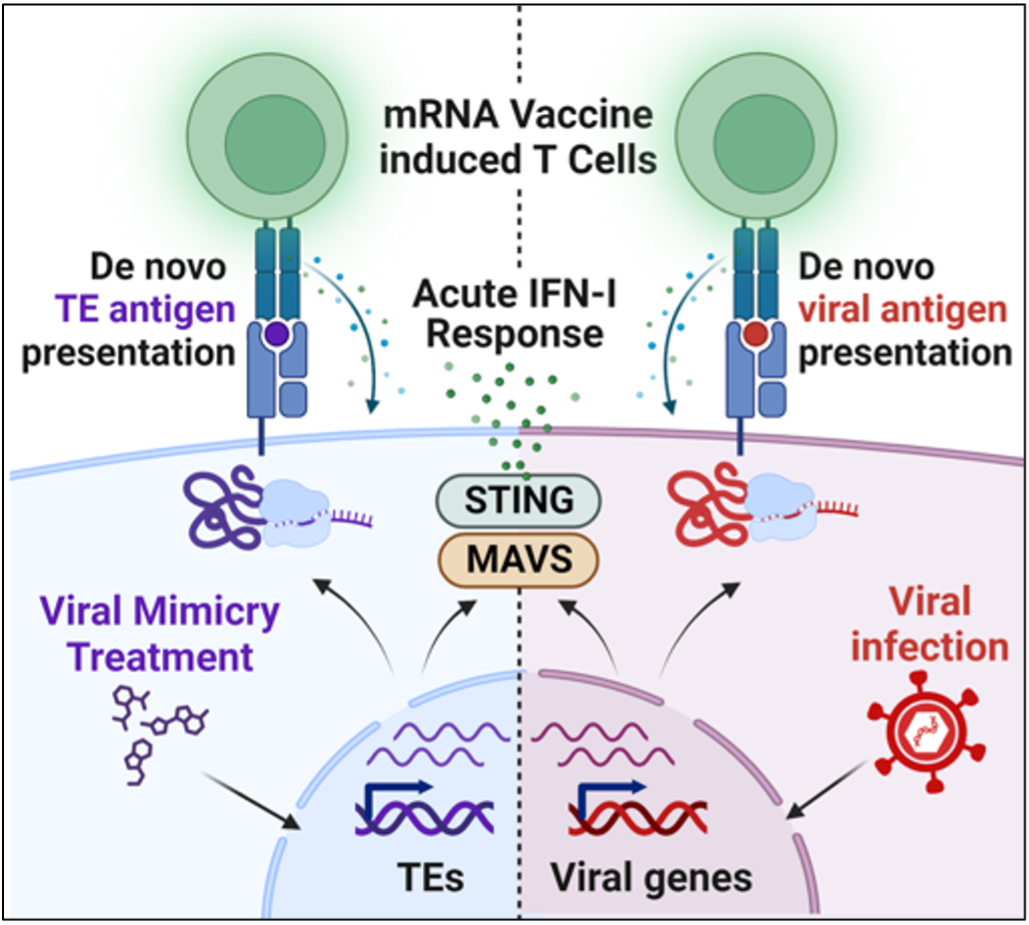
Making cancer cells look infected.
We harness transposable element–driven immune response to activate innate immunity, expose new antigens, and improve recognition by vaccine-induced T cells.
Leveraging transposable element–driven viral mimicry to enhance cancer vaccination
Therapeutic cancer vaccines can generate tumor-reactive T cells, but their efficacy is often limited by poor tumor immunogenicity, insufficient antigen presentation, and an immunosuppressive tumor microenvironment. Our work investigates whether epigenetic reactivation of transposable elements can overcome these barriers and create a tumor state that is more receptive to vaccine-induced immunity.
Transposable elements are normally silenced by DNA methylation and other epigenetic mechanisms. We found that treatment with DNA methyltransferase inhibitors, including azacytidine, reactivates endogenous retroelements and promotes the accumulation of immunogenic RNA and DNA species. These molecules engage tumor-intrinsic nucleic acid–sensing pathways, including MAVS- and STING-dependent signaling, leading to type I interferon responses, increased expression of antigen-presentation machinery, and broader inflammatory reprogramming of the tumor microenvironment.
Using multiple preclinical tumor models, we found that azacytidine enhances the efficacy of therapeutic cancer vaccines, including mRNA-LNP and peptide-based formulations. The combination increases the expansion and function of tumor-specific T cells, improves tumor control, and prolongs survival. We further found that this therapeutic synergy requires intact nucleic acid–sensing pathways within cancer cells, establishing tumor-intrinsic viral mimicry as an important determinant of vaccine efficacy.
We are now working to define the molecular and cellular features that determine when viral mimicry can successfully enhance cancer vaccination. In particular, we are investigating how transposable element reactivation alters tumor antigenicity, immune recognition, and the quality of vaccine-induced T cell responses. Our broader goal is to develop rational, tumor-selective strategies that combine epigenetic therapy with cancer vaccination and to identify principles that can guide their application across different tumor types.