
Harnessing Antiviral Immunity to Improve Chemotherapy
Helping chemotherapy activate the immune system
Chemotherapy damages cancer cells, but it can also help the immune system recognize and attack them. We explore how certain chemotherapies awaken remnants of ancient viruses hidden in cancer cells’ DNA. These elements produce molecules that mimic a viral infection, triggering an alarm that alerts the immune system to the cancer.
Cancer cells can weaken this alarm through enzymes that suppress these signals. We investigate ways to block these enzymes and strengthen the immune response, with the goal of making chemotherapy more effective by helping cancer cells sound the alarm.
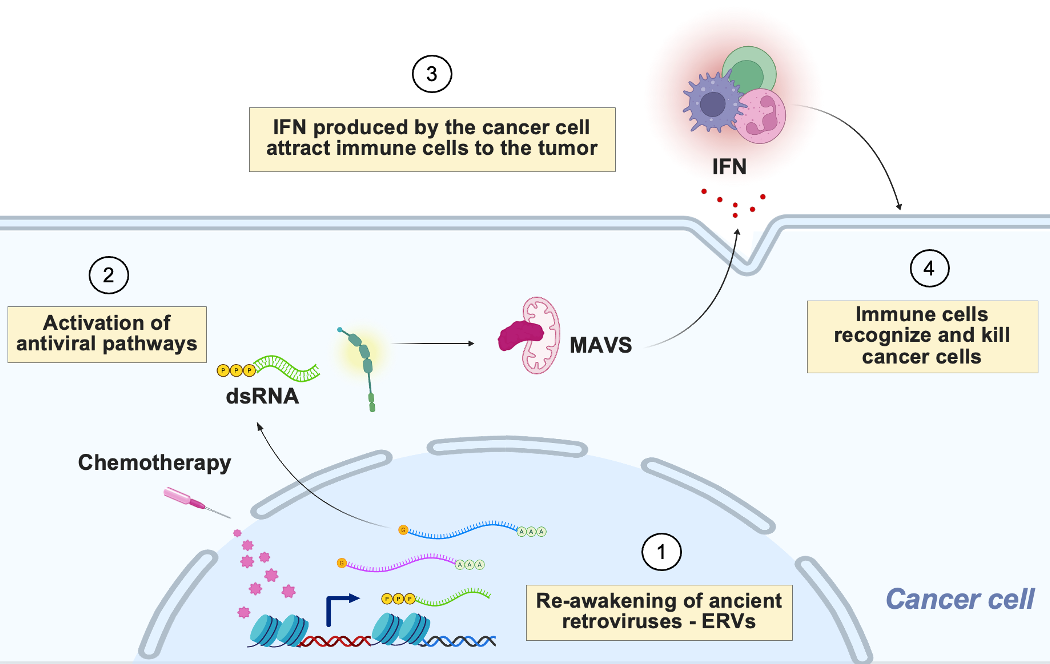
Helping chemotherapy sound the alarm
Chemotherapy awakens remnants of ancient viruses hidden in cancer cells’ DNA. These remnants trigger antiviral defenses, prompting cancer cells to release distress signals called interferons. These signals help attract immune cells to recognize and kill the cancer cells.
Leveraging cancer-intrinsic RNA sensing to improve chemotherapy immunogenicity
Chemotherapies are designed to drive direct cytotoxicity of cancer cells by damaging their DNA. However, recent studies have demonstrated this process indirectly engages the immune system by eliciting cancer cell production of type I IFN (IFN-I) following the sensing of cytoplasmic nucleic acids by antiviral receptors. DNA damage induced by chemotherapy can release DNA into the cytoplasm and trigger cGAS/STING-mediated IFN-I production. Importantly, cancer-intrinsic IFN-I can signal (i) autocrinely to enhance the cytotoxic effects of chemotherapy and (ii) paracrinely to shape the surrounding tumor microenvironment (TME) by modulating the function of immune cells.
However, the cGAS/STING pathway is frequently silenced in cancer, impairing therapeutic responses during cancer treatment. In these settings, we study how chemotherapies can produce IFN-I following the sensing of double-stranded RNA (dsRNA) through the MAVS pathway.
Our work investigates how DNA-damaging chemotherapy causes epigenetic dysregulation in cancer cells, leading to the de-repression of quiescent endogenous retroviruses (ERVs) – repetitive DNA sequences thought to originate from ancient retroviruses embedded within the genome. Importantly, our work suggest the sensing of these ERVs by cancer cells can drive immune recruitment to the TME and is required for chemotherapy efficacy in tumors with impaired DNA sensing.
We are also investigating ways to strengthen dsRNA signaling following chemotherapy to improve therapeutic outcomes in tumors with impaired cGAS/STING signaling. We found that cancer cells upregulate RNA-modifying enzymes that attenuate ERV-derived dsRNA and restrict IFN-I responses. We show that these regulators can be targeted to promote the accumulation of chemotherapy-induced dsRNA, leading to more potent IFN-I responses, and greater overall survival.